
In my last blog, I talked about the problem in the
foundation repair industry of recognizing and dealing with expansive soils in
an honest and productive way. I discussed that the symptoms for both heave and
settlement look very similar from just walking around and looking at the house.
The fact that there are so many homes
with heave that go misdiagnosed seems to fly under the radar and not get much
attention. This is amazing considering that it is a $55 billion a year industry
in North America and much of that is wasted on the wrong solution. In dry
climates like Arizona, the number is staggeringly high. We see at least 80% of
the homes that we encounter some form of heave from expansive soils.
So lets look at why underpinning the common accepted
solution for settlement is the wrong thing to do for homes that have heave from
expansive soils. Take a look at the picture below.

Now lets look at the heave from expansive soils.
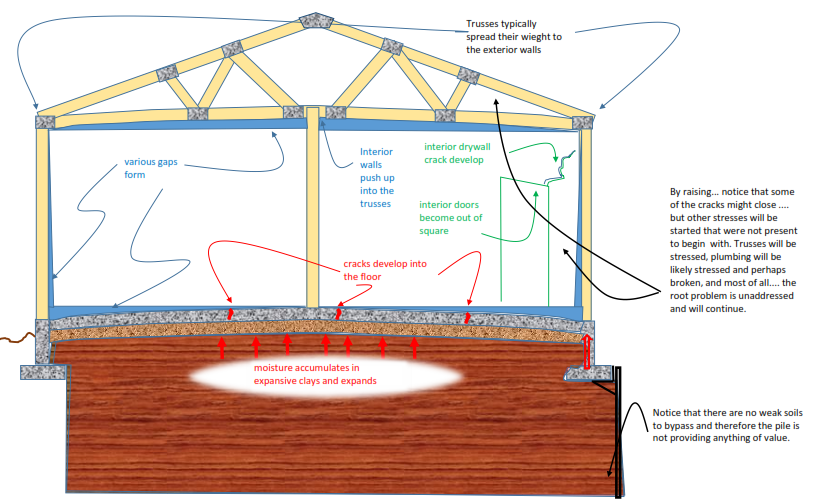
You can easily see that underpinning a home with heave from
expansive soils is not only of no value…. It is actually counterproductive….
putting stress on the structural components.
So is this a problem? Thousands of homeowners are
unknowingly being bilked into paying for this across the country because they
have no idea of these concepts and don’t know how to tell the difference
between heave and settlement. And as pointed out the foundation repair
contractors are not motivated to really distinguish between the two conditions
because by identifying it they now have to admit that they are providing the a
wrong solution that has no value and is counterproductive…… and if they are
honest will go home hungry that day with nothing of value to offer the
homeowner.
So after this brief detour, on my next blog I will discuss how to successfully identify home heave from expansive soils verses settlement.
So after this brief detour, on my next blog I will discuss how to successfully identify home heave from expansive soils verses settlement.

